Socialisation is the single most important thing you can do for your pup’s lifelong confidence. It’s also one of the most misunderstood. Here’s what the science actually says.
If you’ve just brought a puppy home, you’ve probably been told to “socialise them early.” It’s good advice, but it’s often taken to mean something it isn’t. Done well, socialisation builds a calm, adaptable adult dog. Done poorly (or skipped), it’s the root of most of the fear, reactivity and anxiety we see in the dogs who come to us as adults.
This guide covers what puppy socialisation actually is, why the timing matters so much, and the three myths we most often have to un-teach — written for guardians raising pups here in Singapore, where lifts, void decks, hawker-centre smells and heavy rain are all part of your pup’s world.
What Socialisation Actually Is
Socialisation isn’t “meeting lots of dogs and people.” It’s the process by which a puppy learns, through calm and positive experiences, that the everyday world is safe: surfaces, sounds, traffic, strangers, umbrellas, the MRT rumbling underfoot, a toddler’s squeal, the vet’s table.
The goal is not excitement. It’s neutrality. A well-socialised pup notices something new, checks in with you, and carries on. Every good experience during this stage is a deposit in your pup’s confidence bank — one they’ll draw on for the rest of their life.
The Science: A Window That Closes
Puppies go through a sensitive period for socialisation from roughly 3 to 14 weeks of age. During this window, their brains are wired to accept new experiences with curiosity rather than fear. After it closes, novelty is increasingly met with suspicion. That’s a survival feature, not a flaw.
This is why the timing is so unforgiving: most pups come home at 8 to 10 weeks, which leaves guardians only a handful of weeks inside the window. What your pup experiences (and doesn’t experience) in that time shapes their adult temperament more than almost anything else you’ll do. Veterinary behaviourists consider under-socialisation a greater risk to a pet dog’s lifelong welfare than the diseases we vaccinate against — which brings us to the first myth.
Myth 1: “Wait Until All the Vaccinations Are Done”
This is the most common, and most costly, myth we hear. If you wait until the final vaccination (often 16 weeks or later), the socialisation window has already closed. The good news: you don’t have to choose between disease safety and behavioural health.
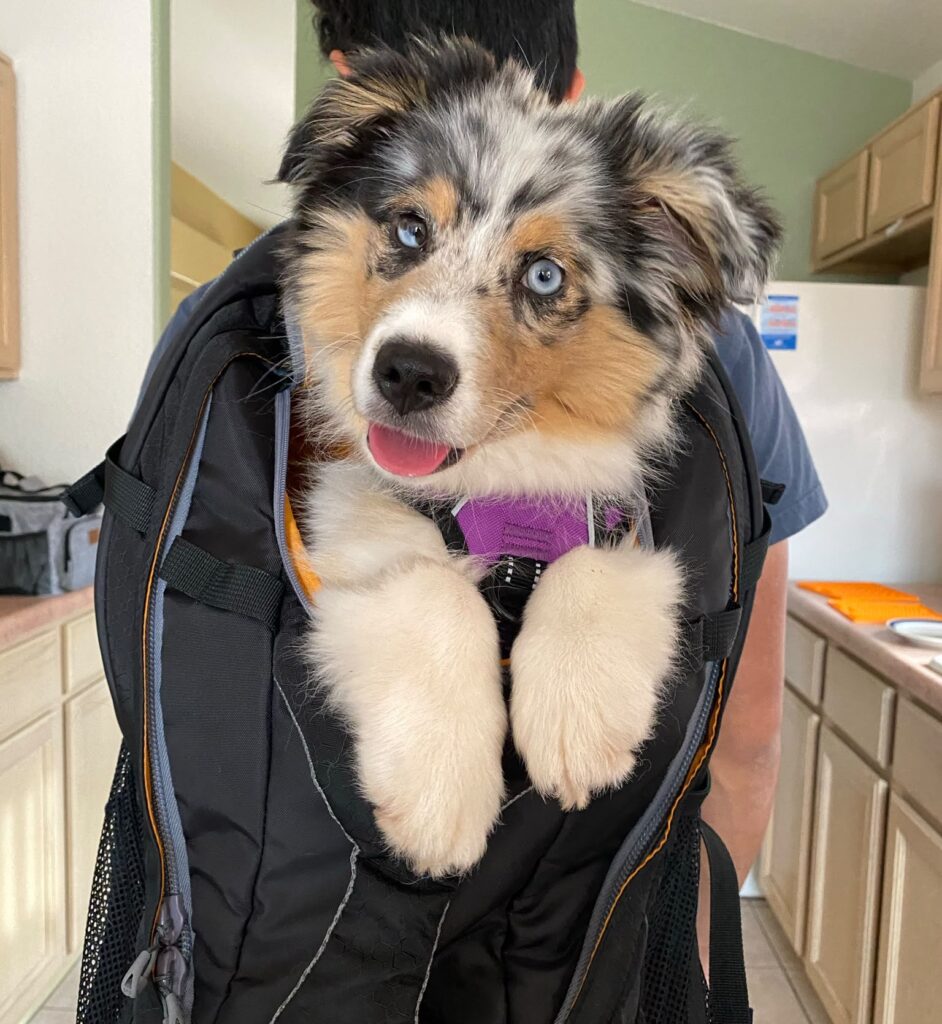
Safe socialisation before full vaccination means controlled exposure: carrying your pup through busy areas, car rides, visits to vaccinated friends’ homes, puppy classes that require proof of first vaccines and sanitise their floors. What you avoid is unmanaged ground contact in high-dog-traffic areas — not the world itself.
Myth 2: “Socialisation Means Playing With Lots of Dogs”
Free-for-all play at a dog run is not socialisation. For many pups it’s the opposite. One bad experience with a rude adult dog during the sensitive period can seed a lifetime of dog-reactivity. And a pup who learns that every dog means WILD PLAY becomes the adolescent who drags you across the park.
What your pup actually needs is a broad menu of calm, positive experiences: different people, surfaces, sounds, handling, environments — and yes, some carefully matched dog interactions, ideally with steady, tolerant adult dogs who teach good manners.
Myth 3: “A Scared Pup Will Just Get Over It”
Forcing a frightened puppy to “face their fear” (holding them still while strangers pet them, dragging them toward the thing that worries them) is called flooding — and it reliably makes fear worse. Exposure only builds confidence when the pup feels safe and has a choice.
The force-free approach: let your pup observe from a distance where they’re comfortable, pair the new thing with something wonderful (usually food), and let them decide when to move closer. Retreat is always allowed. Watch the body language: a loose, wiggly body says “more please”; a tucked tail, pinned ears or turned-away head says “too much, too fast.”
Getting It Right: Quality Over Quantity
You don’t need a 100-item checklist completed at speed. A few principles cover almost everything:
- One new thing a day beats ten new things on Sunday. Short, positive, done.
- Pair novelty with good things: treats, play, your calm voice.
- Let your pup set the pace. Choice is what turns exposure into confidence.
- End on a good note. A five-minute win is worth more than a thirty-minute ordeal.
- Missed the window? Adult dogs can still learn. It just takes more time, more care, and often professional support. It’s never hopeless.
Why Trust Us on This
Wigglebutts Academy has been training pups in Singapore since 2016. Our trainers are KPA CTP (Karen Pryor Academy Certified Training Partners) and FFCP (Fear Free Certified Professionals). Everything we teach is force-free, fear-free and grounded in the science of how dogs actually learn.
Wiggle, Learn, Thrive
Raising a confident pup is a marathon of small, good moments — and you don’t have to figure it out alone. Follow us on Instagram for force-free training tips, or learn more about how we help pups thrive.